The Adventures of Solid Waste
Proyecto educativo para el manejo responsable de los residuos sólidos.
About
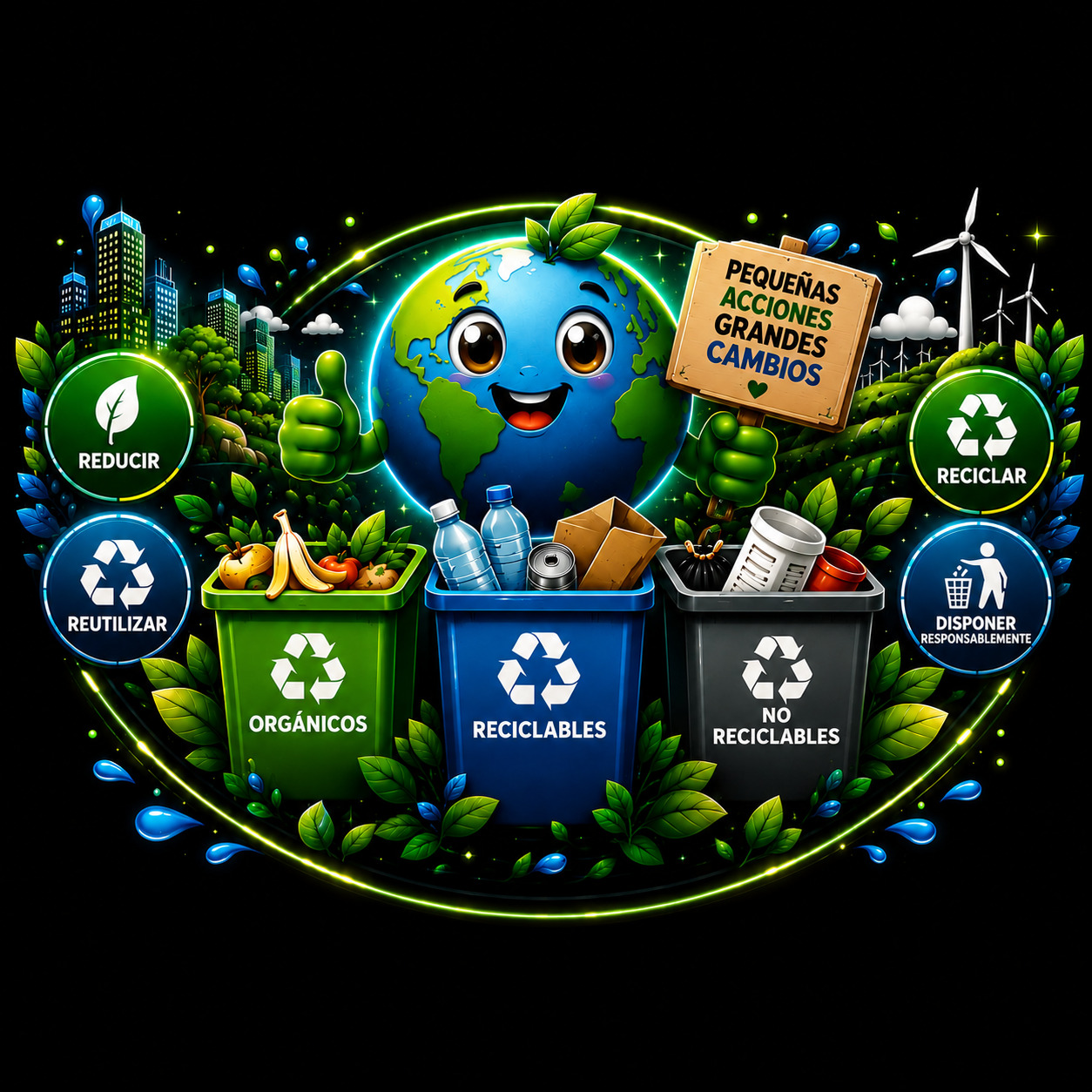
This project focuses on improving the management of solid waste within the educational institution. The improper disposal of waste can negatively affect the environment, school cleanliness, and the well-being of students and staff.
For this reason, the project promotes the reduction, reuse, and recycling of materials generated in the school community.
Through educational activities and awareness campaigns, students will learn the importance of responsible waste management and environmental protection.
The project also encourages the active participation of the entire educational community in creating a cleaner and healthier environment.
About Project
These are the most common types of solid waste found in the educational institution:
- Paper and cardboard: used notebooks, sheets and boxes.
- Plastics: bottles, wrappers and packaging.
- Organic waste: food leftovers.
- Glass and metals: cans, jars and containers.
- Non-recyclable waste: dirty paper and contaminated materials.
Objectives
To design and implement a solid waste management system and a vertical garden in the institution in order to improve the aesthetics of school spaces, reduce bad odors in specific areas, and promote environmental sustainability and ecological awareness within the educational community.
Specific Objectives
- To improve institutional spaces and enhance the visual and environmental quality of the school through proper solid waste management practices.
- To promote the separation, reduction, reuse, and recycling of solid waste generated within the school.
- To select plant species that contribute to air purification and help reduce unpleasant odors in areas such as restrooms and common spaces.
- To strategically locate the vertical garden in areas affected by poor air quality or odor problems.
- To involve students and staff in the creation, maintenance, and care of the garden to strengthen environmental awareness and responsibility.
- To use the vertical garden as a pedagogical tool for environmental education and learning about solid waste management.
- To implement a maintenance plan that ensures cleanliness, functionality, and long-term sustainability of the project.
- To design a vertical garden that improves aesthetics while promoting the reuse of recyclable materials as part of solid waste reduction strategies.
Join the discussion
We can all contribute to creating a cleaner and healthier school environment.
Recycling and reusing materials are simple actions that can make a big difference.
Environmental education is important for building responsible habits.